Golden Art Deco Banner Frames: Geometric Elegance for Modern Design
In the ever-evolving landscape of digital and print design, trends often cycle back to eras defined by opulence, precision, and artistic flair. Among the most enduring styles is the Art Deco movement of the 1920s, characterized by its bold geometric shapes, rich colors, and lavish ornamentation. Today, designers and content creators are increasingly turning to Golden Art Deco Banner Frames. Geometric elements to infuse their projects with a sense of timeless luxury and structured beauty. These assets are not merely decorative; they serve as powerful visual anchors that guide the viewer’s eye and elevate the perceived value of the content they surround.
The Allure of the Roaring Twenties in Contemporary Design
The 1920s were a period of significant cultural shift, marked by economic prosperity and a fascination with modernity. This era gave birth to Art Deco, a style that celebrated symmetry, streamlined forms, and industrial materials. When we discuss Geometric gold lines frame designs, we are referencing this specific historical aesthetic. The appeal lies in the balance between rigidity and elegance. Unlike the organic, flowing lines of Art Nouveau, Art Deco relies on sharp angles, sunburst motifs, and stepped forms.
Integrating a luxury decorative corners and premium label vector set into modern workflows allows creators to tap into this psychological association with wealth and sophistication. Whether used for a wedding invitation, a high-end product launch, or a corporate annual report, these frames communicate a message of quality before the viewer even reads the text. The "golden" aspect is crucial; gold has universally symbolized prestige and excellence across cultures, making it a safe yet impactful choice for premium branding.
Deconstructing the Elements: What Makes These Frames Effective?
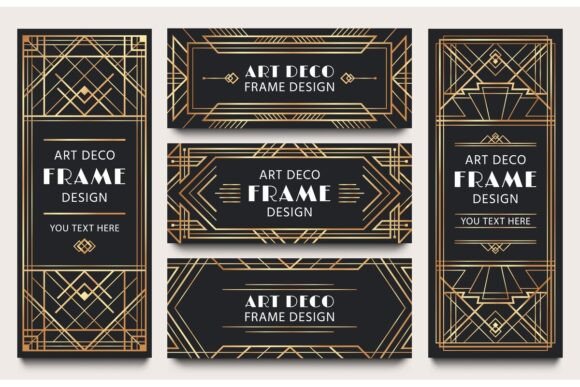
To effectively utilize a Collection of elegant card templates decorated by retro ornaments in 1920s style, it is essential to understand their constituent parts. These are not random embellishments but carefully constructed design systems.
- Geometric Precision: The core of these frames is the use of straight lines, triangles, and circles. This geometry provides a clean structure that helps organize information, making it easier for readers to digest complex data or important announcements.
- Gold Gradients and Textures: High-quality vectors often simulate the look of metallic gold foil. This adds depth and realism, preventing the design from appearing flat or cheap. The interplay of light and shadow in these textures mimics physical luxury goods.
- Decorative Corners: The corners are typically the most ornate part of the frame. They act as visual bookends, containing the content and drawing the eye inward. In a luxury decorative corners and premium label vector set, these elements are often modular, allowing designers to mix and match them for custom layouts.
- Retro Ornaments: Small details such as fan shapes, chevrons, and stylized floral motifs add character without overwhelming the main message. These ornaments bridge the gap between strict geometry and artistic expression.
Practical Applications for Creators and Businesses
The versatility of Golden Art Deco Banner Frames. Geometric assets makes them suitable for a wide array of industries. Here are several real-world scenarios where these elements can significantly enhance communication:
1. Event Invitations and Hospitality
The hospitality industry, particularly luxury hotels and upscale restaurants, frequently employs Art Deco aesthetics to evoke the glamour of the Great Gatsby era. Using a Geometric gold lines frame on digital invitations or printed menus creates an immediate expectation of a high-quality experience. For weddings, these frames provide a sophisticated backdrop for names and dates, transforming a simple card into a keepsake.
2. Premium Product Packaging
For businesses selling cosmetics, jewelry, or gourmet foods, packaging is the first point of contact with the consumer. A Collection of elegant card templates decorated by retro ornaments in 1920s style can be adapted for box designs, labels, and hang tags. The geometric borders help highlight the brand logo and product name, ensuring they stand out on crowded shelves. The association with the 1920s suggests heritage and craftsmanship, which can justify higher price points.
3. Corporate Branding and Certificates
Law firms, financial institutions, and consulting agencies often seek to project stability and trust. The structured nature of Art Deco geometry aligns well with these values. Certificates of achievement, diplomas, and official documents benefit from the formal appearance of luxury decorative corners. Furthermore, corporate presentations can use these frames as slide borders to maintain a consistent, professional theme throughout a pitch deck.
4. Digital Marketing and Social Media
In the digital realm, attention spans are short. A striking visual border can stop a user from scrolling past a post. Instagram stories, Facebook ads, and Pinterest pins featuring Golden Art Deco Banner Frames. Geometric designs tend to have higher engagement rates for luxury brands. The contrast between the gold elements and a dark background (such as black or navy blue) is particularly effective on mobile screens, offering high visibility and readability.
Evaluating Suitability: When to Use Art Deco Frames
While these assets are powerful, they are not a one-size-fits-all solution. Designers must evaluate whether the style aligns with the brand identity and the specific message being conveyed.
- Brand Alignment: Does the brand value tradition, luxury, and boldness? If the brand identity is minimalist, eco-friendly, or playful, Art Deco might feel disjointed. However, for brands aiming for "classic luxury," it is an ideal fit.
- Content Density: Art Deco frames are intricate. If the content within the frame is extremely dense with text, the ornate borders may compete for attention. It is best to use these frames for headlines, short quotes, or key data points rather than long-form articles.
- Color Palette Compatibility: Gold pairs exceptionally well with black, white, deep green, navy, and burgundy. It may clash with pastel colors or neon tones. Ensuring the surrounding color scheme complements the gold tones is vital for a cohesive look.
Technical Considerations and Best Practices
When working with a luxury decorative corners and premium label vector set, technical execution plays a significant role in the final outcome. Vector formats (such as SVG, AI, or EPS) are preferred because they allow for infinite scalability without loss of quality. This is crucial for both large-format printing (like banners) and small digital icons.
Designers should also pay attention to layer management. High-quality sets often come with separate layers for the frame, the background, and the decorative elements. This modularity allows for customization. For instance, you might remove the central label if you prefer a open banner look, or change the gold gradient to rose gold to better suit a specific campaign.
Furthermore, accessibility should not be overlooked. Ensure that the text placed within or near these Golden Art Deco Banner Frames. Geometric elements has sufficient contrast against the background. Gold text on a white background, for example, can be difficult to read. Using a dark background or adding a drop shadow can improve legibility while maintaining the aesthetic.
Conclusion: Timeless Style for Modern Communication
The resurgence of 1920s-inspired design is not merely a fleeting trend but a testament to the enduring power of Art Deco principles. By incorporating Golden Art Deco Banner Frames. Geometric elements into your design toolkit, you gain access to a visual language that speaks of elegance, precision, and quality. Whether you are a small business owner looking to elevate your packaging, a designer creating event materials, or a marketer aiming to capture attention on social media, these assets offer a practical and stylish solution.
Ultimately, the value of a Collection of elegant card templates decorated by retro ornaments in 1920s style lies in its ability to transform ordinary content into something extraordinary. By understanding the components, applications, and limitations of these designs, you can make informed decisions that enhance your visual communication strategy. As you explore the possibilities, remember that the goal is not just to decorate, but to elevate the message, ensuring it resonates with your audience through the universal appeal of golden, geometric elegance.