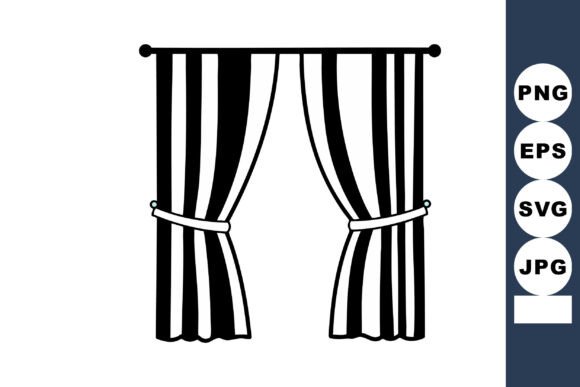
Window Curtains with Tiebacks: Simple Black & White
There is a distinct quiet confidence in the combination of black and white. It does not shout for attention, yet it commands respect through its clarity and balance. When applied to interior design, specifically through window curtains with tiebacks, this monochromatic palette offers a timeless mood that transcends fleeting trends. The image of black and white striped window curtains tied back neatly creates a classic and clean decorative look for interiors, serving as a foundational element for spaces that value order, elegance, and visual calm.
For designers, homeowners, and digital creators alike, understanding the utility and aesthetic power of this specific design element is crucial. It is not merely about covering a window; it is about framing a view, controlling light, and establishing a rhythmic visual language within a room. The downloadable ZIP file containing SVG, EPS, JPG, and PNG files of this design provides versatility for both physical implementation and digital representation, making it a valuable asset across various professional and personal projects.
The Anatomy of a Timeless Look
The appeal of Window Curtains with Tiebacks Simple Bla lies in its structural simplicity. Stripes are one of the oldest patterns in textile history, offering a sense of height and structure when oriented vertically. When these stripes are rendered in stark black and white, they create a high-contrast visual that defines space without adding chromatic noise. This is particularly useful in modern interiors where color palettes are often restrained to allow architectural features or furniture pieces to stand out.
The inclusion of tiebacks is not merely functional; it is compositional. By pulling the curtains back, you introduce curves that soften the rigid vertical lines of the stripes. This interplay between the straight, graphic nature of the pattern and the organic drape of the fabric adds depth and sophistication. A neatly tied-back curtain suggests intentionality and care, contributing to an overall atmosphere of tidiness and refinement. This "clean decorative look" is essential for environments where clutter is the enemy, such as minimalist homes, professional offices, or boutique retail spaces.
Versatility Across Digital and Physical Realms
While the primary application of this design is physical home decor, the availability of the design in multiple digital formats—SVG, EPS, JPG, and PNG—opens up a wide array of creative possibilities. Here is how different professionals can leverage this asset:
- Interior Designers and Architects: Use the high-resolution JPG or PNG files in client presentations, mood boards, and 3D renderings. The realistic depiction of the tied-back curtains helps clients visualize the final outcome, bridging the gap between concept and reality.
- Graphic Designers and Marketers: The SVG and EPS files are vector-based, meaning they can be scaled infinitely without loss of quality. These are ideal for creating branding materials, website backgrounds, or promotional graphics for home decor brands. The clean lines translate well into logos or iconography related to home improvement.
- Educators and Bloggers: Content creators focusing on lifestyle, DIY, or interior design can use these images to illustrate articles about color theory, pattern mixing, or window treatment styles. The visual clarity supports educational content by providing a clear example of the concepts being discussed.
- Print-on-Demand Entrepreneurs: The vector files allow for easy adaptation onto various products, from throw pillows and tote bags to wall art prints. The timeless nature of the black and white stripe ensures marketability across seasons.
Enhancing User Experience and Engagement
In digital environments, imagery plays a pivotal role in user engagement. A well-composed image of black and white striped window curtains can significantly enhance the aesthetic appeal of a website or social media feed. The high contrast ensures visibility on various screen sizes and resolutions, while the orderly composition conveys a sense of reliability and professionalism. For e-commerce sites selling home goods, using such imagery can elevate the perceived value of the entire catalog, suggesting a curated and thoughtful selection process.
Furthermore, the psychological impact of order and symmetry should not be underestimated. In an era of information overload, clean and organized visuals provide a moment of respite for the viewer. This can lead to longer dwell times on web pages and higher conversion rates, as users associate the visual clarity with brand trustworthiness. The "timeless mood" evoked by this design aligns with brands that position themselves as enduring, reliable, and classic.
Practical Considerations for Implementation
When integrating this design into a real-world project, whether physical or digital, several factors warrant consideration to maximize its impact:
- Scale and Proportion: In physical applications, the width of the stripes matters. Wider stripes make a bold statement and work well in large rooms with high ceilings, while narrower stripes offer a more subtle texture suitable for smaller spaces. In digital designs, ensure the stripe width remains visible and distinct at smaller sizes, such as on mobile devices.
- Lighting Conditions: Black and white fabrics interact differently with light. White sections may glow when backlit, while black sections absorb light. Understanding the direction of natural light in a room is crucial for predicting how the curtains will appear throughout the day. For digital renderings, accurate lighting simulation enhances realism.
- Material Texture: The choice of fabric affects the drape and the way the tiebacks hold the curtain. Heavier fabrics like linen or cotton blends create substantial folds, while lighter materials like voile offer a softer, airier look. The texture adds a tactile dimension to the visual experience, which should be highlighted in close-up photography or detailed renderings.
- Complementary Elements: Because the pattern is strong, it pairs best with solid-colored walls and furniture. Introducing additional patterns can create visual chaos. Instead, use texture—such as a wool rug or a wooden table—to add interest without competing with the curtains.
Why Simplicity Endures
The enduring popularity of Window Curtains with Tiebacks Simple Bla is a testament to the power of reduction. By stripping away unnecessary color and complexity, we are left with form, line, and contrast. This approach resonates with a modern audience that values authenticity and functionality. It is a design choice that respects the viewer’s intelligence, offering beauty without demanding excessive cognitive load.
For the professional creator, having access to this design in a comprehensive ZIP package means flexibility. You are not locked into a single use case. You can adapt the vector files for a large-scale print campaign or use the raster images for quick social media updates. This efficiency supports productivity, allowing you to focus on strategy and storytelling rather than getting bogged down in asset creation.
Ultimately, the decision to use black and white striped curtains tied back neatly is a decision to prioritize clarity. It is a declaration that style does not require excess. Whether you are designing a living room, a corporate lobby, or a digital interface, this classic element provides a stable, elegant foundation upon which you can build a cohesive and compelling narrative. Embrace the simplicity, leverage the versatility, and let the timeless mood of monochrome elevate your next project.